

A kids sleepover can start with the best intentions and still end with everyone wondering what time it is. The kids want one more game, one more snack, and one more round of talking. But parents are usually watching the clock and wondering if the bedtime has gone too far. The tricky part is finding the right balance.
So, how long should a sleepover last? The answer depends on the children’s ages, comfort levels, bedtime routines, and whether the gathering is an evening sleep-under or a full overnight party. Let’s discuss the entire sleepover timeline in detail in this comprehensive guide.
How Long Should a Sleepover Last for Kids?
For most kids, an overnight sleepover can last from late afternoon until the following morning. Younger children may be happier with a shorter evening or a sleep-under party, while older kids may enjoy a longer overnight gathering.
Here is an overview with example timing:
| Age | Suggested approach | Example timing |
| 5 to 7 | Short evening or sleep-under | 4 PM to 8 or 9 PM |
| 7 to 9 | Shorter overnight | 4 or 5 PM to 9 AM |
| 9 to 12 | Full sleepover | 4 or 5 PM to 9 or 10 AM |
| 12+ | More flexible | Based on group and family rules |
Age is only one factor. A child who feels nervous about sleeping away from home may prefer a shorter first experience. Similarly, another child of the same age may feel completely comfortable staying overnight.
What is a Good Sleepover Schedule for Kids?
A good sleepover schedule for kids usually starts in the late afternoon and gradually moves from active play toward quieter evening activities.
You should give guests time to settle in, put belongings away, and meet the host family. It is also important to learn some basic house rules. Some free play is useful before the planned slumber party activities begin.
Then, dinner can happen soon after arrival or later in the evening. A 4 PM arrival can work well with dinner around 6 PM, followed by the main activity.
As for activities, two or three are usually enough. Kids also need room for chatting, playing, and deciding what they want to do next. After that, pajamas work well as a transition from energetic activities to quieter parts of the night. Changing around 8:30 or 9 PM can signal a shift toward bedtime.
Finally, start quiet time about 30 to 60 minutes before lights out. A movie, simple craft, story, or quiet game can help bring the energy level down.
What Time Should a Kids Sleepover Start?
A start time between 4 PM and 5 PM works well for many weekend sleepovers. A later arrival can also help prevent kids from becoming tired of one another before bedtime.
A 3 PM start can work for younger children or a party with several planned activities. A 5 PM start can make more sense when dinner is part of the evening. For a school night, families may prefer a shorter gathering. Weekend sleepovers provide more flexibility because children do not need to wake up for school the following morning. PBS Kids also recommends a later drop-off and a specific morning pickup time for sleepovers.
What Time Should Kids Go to Bed at a Sleepover?
Younger children may need lights out around 9:30 or 10 PM, while older kids may be comfortable staying up later. Family routines and the children’s usual bedtime matter more than one fixed rule.
But there is also an important difference. Lights out and falling asleep are two different things. Kids may whisper or laugh for a while after lights go out. A clear quiet period is more realistic than expecting instant sleep.
What Time Should Parents Pick Up Kids After a Sleepover?
A morning pickup around 9 or 10 AM works well for many families. A specific time gives the host family enough room for breakfast, getting dressed, packing belongings, and tidying the sleeping area.
An open-ended pickup window can make the morning harder. Add the pickup time to the invitation or message sent to parents before the party.
How Do You Know If Your Child Is Ready for a Sleepover?
A child may be ready when they feel excited about staying overnight, can tell an adult when something feels uncomfortable, and can manage a few hours away from home without distress.
Ask your child these few simple questions before making plans:
- Have they slept away from home before?
- Are they choosing the sleepover freely?
- Do they understand the basic rules of the host home?
- Can they contact you if they want to leave?
Readiness matters more than a specific birthday.
What If Your Child Is Not Ready to Stay Overnight for a Sleepover?
If your child is not ready to stay overnight for a sleepover, a sleep-under is an excellent first step. Guests arrive in the afternoon or early evening, enjoy food and sleepover activities, then head home before bedtime.
Up Parties offers sleepunders as an option, so families can have a slumber party experience without an overnight stay. We also provide themed teepee and canopy setups for home celebrations.
A shorter gathering can help a child discover whether an overnight party feels comfortable without turning the first experience into a stressful event.
How Many Kids Should You Invite to a Sleepover?
A small group is usually easier for a first sleepover. One to three guests can be enough for younger children, while older kids may handle a larger group.
Here are the important things to consider to find the right guest count for your sleepover:
- Sleeping area
- Bathroom access
- Supervision
- Food
- Group dynamics
A smaller group can also make conversations and activities easier.
It is also important to learn the difference between a canopy sleepover and a teepee sleepover party. That’s because both sleepovers have different space requirements.
What Should Kids Eat at a Sleepover?
Plan dinner, a few sleepover snacks, drinks, and breakfast. Ask parents about food allergies and dietary restrictions before the party.
You only need pizza, sandwiches, fruit, popcorn, simple desserts, and water. Remember, a few food items can cover most of the evening without creating a complicated menu. Keep heavy snacks and sugary drinks away from the final part of the night if bedtime is already a challenge.
A Realistic Kids Sleepover Timeline
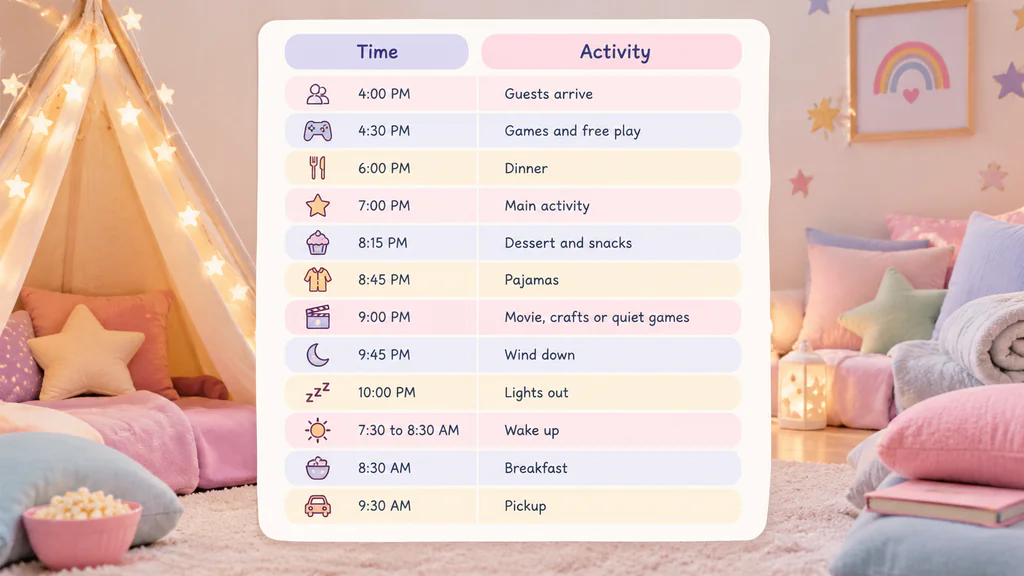
This is a timeline example for a kids sleepover that you can copy and change based on age, bedtime, and the children’s energy level.
Wrapping Up
In the end, how long should a sleepover last depends on the children involved. A four-hour sleep-under can be perfect for one group, while another group may happily stay from late afternoon until breakfast. Start with the children’s age and comfort level, then build a schedule around what makes the night enjoyable for everyone.
If you are ready to turn the sleepover plan into a special night, Up Parties can help with the setup. Choose from themed options for different ages and party styles. Then, take the next step and book your date today.
FAQs
What Should You Do the Morning After a Sleepover?
Keep the morning simple. Give kids time to wake up, have breakfast, get dressed, pack their belongings, and spend a little time together before pickup. A calm morning can make the whole sleepover feel more relaxed.
Is It Better to Have a Sleepover on Friday or Saturday?
Saturday usually gives families more freedom because kids can sleep in on Sunday. Friday can also work well if children need Saturday to recover before another busy week begins. You should choose the day that fits school, sports, family plans, and bedtime routines.
What Are the Most Common Sleepover Planning Mistakes?
The biggest mistakes include starting too early, inviting too many guests, packing the evening with activities, setting bedtime too late, forgetting breakfast, and failing to agree on a pickup time.